
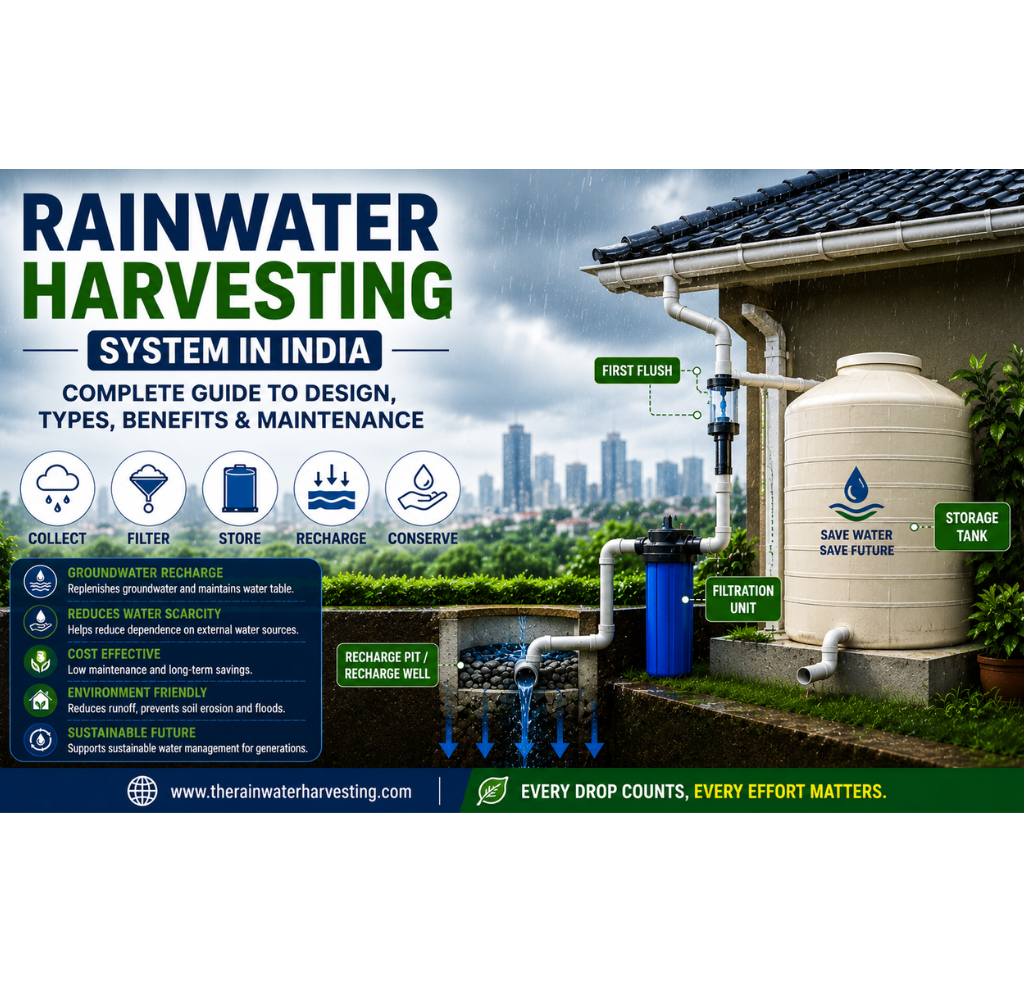
Rainwater Harvesting System in India: Complete Guide to Design, Types, Benefits & Maintenance
A rainwater harvesting system in India is a planned method of collecting rainwater from rooftops or other suitable catchment areas, filtering it and either storing it for suitable use or directing it towards groundwater recharge. A properly designed system can help reduce rainwater runoff, conserve water and support groundwater replenishment where site conditions are suitable.
With increasing urban development and growing water demand, rainwater harvesting has become an important part of sustainable water management for homes, apartments, housing societies, commercial buildings and industrial properties.
A well-designed Rainwater Harvesting System in India should be planned according to local rainfall, catchment area, available space and site conditions.
A properly designed Rainwater Harvesting System in India can be planned according to the property’s catchment area, rainfall pattern, available space and water management requirements.
What Is Rainwater Harvesting?
Rainwater harvesting is the process of collecting, conveying, filtering and managing rainwater for storage or groundwater recharge.
A typical rainwater harvesting system may include:
- Rooftop catchment
- Gutters and downpipes
- First-flush arrangement
- Filtration unit
- Storage tank
- Recharge pit
- Recharge well
- Recharge trench
- Conveyance pipelines
- Inspection and maintenance points
The exact components depend on the property, catchment area, rainfall, soil conditions, groundwater conditions and intended use of harvested water.
How Does a Rainwater Harvesting System in India Work?
The basic process is:
Rainfall → Catchment → Collection → First Flush → Filtration → Storage or Recharge
1. Catchment and Collection
Rainwater falls on the rooftop or another suitable catchment surface. Gutters and downpipes collect the water and direct it towards the harvesting system.
The catchment area is an important factor because it influences the potential quantity of water that can be collected.
2. First Flush
The initial rainfall may carry dust, leaves and other material accumulated on the roof. A first-flush system can divert this initial runoff before water enters the main harvesting system.
3. Filtration
Collected rainwater passes through an appropriate rainwater filtration system before storage or groundwater recharge. The type of filtration required depends on the catchment and the intended application.
4. Storage or Groundwater Recharge
After filtration, water can be directed to a storage tank or an appropriate groundwater recharge structure. Depending on site conditions, solutions may include recharge pits, recharge wells or recharge trenches.
The design of a Rainwater Harvesting System in India may include rooftop collection, filtration, storage or groundwater recharge structures depending on the site.
Types of Rainwater Harvesting Systems
Different properties require different rainwater harvesting methods. The most suitable system should be selected after evaluating the site.
The right Rainwater Harvesting System in India should be selected based on site conditions, intended use and technical requirements.
Rooftop Rainwater Harvesting
Rooftop rainwater harvesting collects water from building roofs and directs it towards storage or groundwater recharge.
It is commonly considered for houses, apartments, housing societies, schools, offices, commercial buildings, hotels and industrial facilities.
Groundwater Recharge Systems
A groundwater recharge system is designed to help direct suitable filtered rainwater into the ground.
The choice between a recharge pit, recharge well, trench or another structure depends on factors such as soil characteristics, groundwater conditions, available space and project requirements.
Rainwater Storage Systems
Where appropriate, harvested rainwater can be collected in storage tanks for suitable applications. Storage requirements depend on rainfall, catchment area, water demand, tank capacity and the intended use of the water.
Benefits of Rainwater Harvesting
1. Supports Groundwater Recharge
One of the important applications of rainwater harvesting is groundwater recharge. Where technically appropriate, collected and suitably filtered rainwater can be directed into recharge structures.
2. Reduces Rainwater Runoff
Large urban properties contain many impervious surfaces such as rooftops and paved areas. Rainwater harvesting can help capture and manage a portion of this runoff.
3. Conserves Water
Rainwater is a naturally available resource. Collecting and managing it can support broader water conservation efforts.
4. Supports Sustainable Water Management
Rainwater harvesting can become part of a property’s overall sustainable water management strategy.
5. Suitable for Different Property Types
A professionally planned system can be considered for residential, commercial, institutional and industrial properties, subject to site conditions.
How Is Rainwater Harvesting Calculated?
A rainwater harvesting calculation generally considers the catchment area, rainfall and runoff characteristics.
Potential Rainwater = Catchment Area × Rainfall × Runoff Factor
For example, if a building has a known rooftop area and local rainfall data is available, the potential quantity of rainwater can be estimated using an appropriate runoff factor.
However, the theoretical quantity should not automatically be treated as the final system capacity.
Actual rainwater harvesting system design may also need to consider:
- Peak rainfall intensity
- Collection efficiency
- Roof characteristics
- First-flush requirements
- Filter capacity
- Pipeline capacity
- Storage requirements
- Recharge capacity
- Soil and geological conditions
- Existing drainage arrangements
Therefore, a site-specific assessment is recommended before finalizing the system.
What Factors Should Be Considered in Rainwater Harvesting Design?
A good rainwater harvesting design should be based on the actual property.
Catchment Area
The rooftop or other suitable catchment area determines how much rainfall can potentially be collected.
Rainfall Pattern
Local rainfall data helps evaluate the availability and seasonal nature of rainwater.
Soil and Geological Conditions
These factors are particularly important when planning groundwater recharge structures.
Groundwater Conditions
Existing groundwater conditions should be evaluated before selecting a recharge method.
Available Space
The available area can influence the selection and placement of recharge or storage structures.
Water Demand
If rainwater is intended for storage and reuse, the property’s water requirements should be considered.
The most suitable Rainwater Harvesting System in India depends on the property’s specific technical and environmental conditions.
What Factors Affect Rainwater Harvesting System Cost?
There is no universal fixed price for a rainwater harvesting system.
The actual project cost depends on the property’s specific requirements, including:
- Catchment area
- Building size
- Type of harvesting system
- Number and length of pipelines
- Filtration requirements
- Storage requirements
- Recharge structure type
- Soil conditions
- Groundwater conditions
- Site accessibility
- Existing drainage infrastructure
- Installation requirements
- Maintenance requirements
The cost of a Rainwater Harvesting System in India can vary depending on the size of the property, system design, filtration and recharge or storage requirements.
For this reason, a reliable rainwater harvesting project estimate should be prepared after understanding the actual site. A generic per-square-foot price may not accurately represent every project.
Important Components of a Rainwater Harvesting System
- Catchment: The surface from which rainfall is collected.
- Conveyance system: Gutters, downpipes and pipelines that transport water.
- First-flush system: Diverts the initial runoff.
- Filtration system: Helps remove suspended material before storage or recharge.
- Storage tank: Stores collected rainwater where storage is part of the design.
- Recharge structure: Allows suitable filtered water to be directed towards groundwater recharge.
Each component should be selected according to the project’s technical requirements.
Rainwater Harvesting System Maintenance
Regular rainwater harvesting maintenance is essential for long-term performance.
Maintenance can include:
- Cleaning rooftops
- Removing leaves and debris from gutters
- Checking downpipes
- Cleaning filters
- Inspecting first-flush arrangements
- Removing accumulated sediment
- Checking recharge pits and wells
- Replacing filter media when required
- Inspecting pipelines
- Preparing the system before the monsoon
A maintenance schedule should be developed according to the size and type of the system.
Regular maintenance helps ensure that a Rainwater Harvesting System in India continues to operate effectively over the long term.
Common Mistakes in Rainwater Harvesting
Installing Without a Site Assessment
A standard design may not be suitable for every property.
Ignoring Filtration
Inadequate filtration can create operational and maintenance issues.
Neglecting Maintenance
Blocked pipelines, dirty filters and sediment accumulation can affect system performance.
Selecting a System Only on Price
Initial installation cost should not be the only consideration. Technical suitability, quality, installation and maintenance are also important.
Using the Same Design for Every Property
The correct rainwater harvesting solution depends on the actual site conditions.
Quick Answers About Rainwater Harvesting
Is rooftop rainwater harvesting useful in India?
Yes. It can help collect rainfall from suitable rooftops and manage it through storage or groundwater recharge.
Can rainwater harvesting increase groundwater recharge?
Where site conditions are suitable, appropriately filtered rainwater can be directed through recharge structures to support groundwater replenishment.
How much rainwater can be collected?
The potential depends primarily on catchment area, rainfall and runoff characteristics. A site-specific assessment provides a more reliable estimate.
Does every building need the same rainwater harvesting system?
No. System design depends on the building, catchment area, rainfall, soil, groundwater conditions, available space and intended application.
Does rainwater harvesting require maintenance?
Yes. Regular cleaning, inspection and maintenance of catchment areas, filters, pipelines and recharge structures are important.
Frequently Asked Questions
What is the main purpose of rainwater harvesting?
The main purpose is to collect and manage rainfall instead of allowing it to become uncontrolled runoff. Depending on the system, rainwater may be stored for suitable applications or used for groundwater recharge.
What is the best rainwater harvesting method?
There is no single best method for every property. The appropriate rainwater harvesting technique depends on site-specific factors such as catchment area, rainfall, soil conditions, groundwater conditions and available space.
How much does a rainwater harvesting system cost?
There is no fixed cost. The estimate depends on the project area, system type, filtration, pipelines, storage or recharge requirements and site conditions. A site assessment is recommended for an accurate project estimate.
Can rainwater harvesting be used for housing societies?
Yes. Rainwater harvesting for housing societies can be planned according to the society’s rooftop catchment, drainage network, groundwater conditions, available space and water-management requirements.
Conclusion
A properly planned rainwater harvesting system in India can help manage rainfall, reduce runoff, conserve water and support groundwater recharge where technically appropriate.
However, effective rainwater harvesting requires more than simply installing a recharge pit or storage tank. Site assessment, rainwater harvesting calculation, technical design, filtration, suitable recharge or storage structures and regular maintenance all contribute to the performance of the system.
Whether the requirement is for a home, apartment, housing society, commercial building or industrial facility, the system should be designed according to the property’s actual conditions.
A site-specific Rainwater Harvesting System in India can provide a more suitable solution when the design is based on actual rainfall, catchment and groundwater conditions.
For additional technical information and groundwater-related guidance, refer to the Central Ground Water Board.
If you are planning a rainwater harvesting project, a professional site assessment can help determine the appropriate system, design and project requirements for your property. You can also consult a rainwater harvesting consultancy for a site-specific solution.

