
Introduction to Rainwater Harvesting System
Rainwater harvesting is one of the most effective solutions for managing water scarcity in urban areas, especially where groundwater levels are declining rapidly. A properly designed rainwater harvesting system not only helps conserve water but also supports groundwater recharge and ensures regulatory compliance in many regions.
Understanding the components of rainwater harvesting system is essential for designing a system that operates efficiently and delivers long-term benefits. Each component plays a specific role, and when combined correctly, they create a reliable and sustainable water management solution.
This method is widely used in rooftop rainwater harvesting and is considered one of the most effective water conservation methods in urban areas.
According to global water conservation studies, rainwater harvesting is a reliable solution for sustainable water management.
What is a Rainwater Harvesting System?
A rainwater harvesting system is designed to collect rainwater from surfaces such as rooftops and channel it through a structured system for water storage or groundwater recharge. Instead of allowing rainwater to flow into drains, it is captured, filtered, and reused for various applications.
Depending on the design, the system can be used for domestic, commercial, or industrial purposes, as well as for recharging depleted groundwater levels.
Components of Rainwater Harvesting System
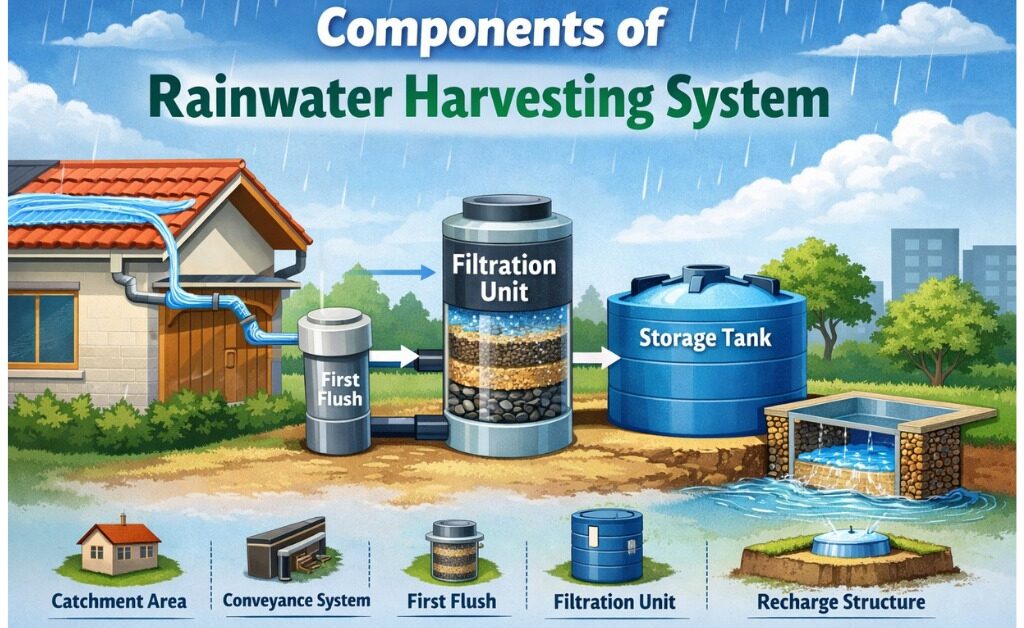
The main components of rainwater harvesting system include the catchment area, conveyance system, first-flush system, filtration unit, storage system, and recharge structure. These components work together to collect, filter, store, and recharge rainwater efficiently.
1. Catchment Area
The catchment area in rainwater harvesting refers to the surface that receives and collects rainwater. In most practical setups, rooftops are used because they offer a relatively clean and efficient surface for capturing rainwater.
2. Conveyance System
The conveyance system in rainwater harvesting consists of gutters and pipelines that carry collected rainwater from the catchment surface to the next stage of the system.
3. First Flush System
The first flush system in rainwater harvesting is designed to separate the initial runoff of rainwater, which often contains dust, dirt, and contaminants washed from the catchment surface.
By separating this initial flow, the system ensures that cleaner water moves forward into the filtration system, improving overall water quality and supporting water conservation.
4. Filtration Unit
The filtration system in rainwater harvesting helps clean the water by removing suspended particles, dirt, and other impurities before water storage or groundwater recharge.
Different filtration methods can be used depending on the system design and water usage requirements. A well-designed filtration system improves water quality and supports sustainable water management.
A properly installed rainwater filtration system ensures safe and clean water for reuse in domestic and commercial applications.
5. Storage System
The rainwater storage system collects and stores harvested rainwater for future use. Storage tanks can be designed based on space availability and water demand.
The use of a rainwater storage tank helps in efficient water collection and reduces dependency on external water sources.
6. Recharge Structure
A groundwater recharge structure allows collected rainwater to seep into the soil, helping restore and improve groundwater levels over time.
These structures are especially important in areas facing groundwater depletion and play a key role in water conservation.
A well-designed groundwater recharge system plays a crucial role in maintaining water balance and preventing depletion.
Practical Considerations Before Installing a System
While understanding the components of rainwater harvesting system is important, proper planning is equally critical. Every building has different requirements based on its structure, location, and water demand.
Factors such as catchment size, rainfall patterns, and groundwater conditions must be considered before designing the system. A well-planned system ensures better efficiency, durability, and compliance with local regulations.
For best results, consult a professional rainwater harvesting company for proper design and implementation.
Importance of a Well-Designed System
A properly designed rainwater harvesting system provides multiple benefits. It reduces dependence on external water sources, supports groundwater recharge, and ensures efficient water management.
In many areas, it also helps meet regulatory requirements related to water conservation and environmental sustainability, especially in regions where rainwater harvesting is encouraged or mandatory.
FAQs
1. Which elements make up a rainwater harvesting system?
The components of rainwater harvesting system include the catchment area, conveyance system, first-flush system, filtration system, storage system, and recharge structure.
2. How does a rainwater harvesting system work?
It collects rainwater from rooftops, filters it, and either stores it for use or directs it for groundwater recharge.
3. Why is filtration important in rainwater harvesting?
A filtration system removes impurities and improves water quality, making it suitable for reuse and storage.
4. What is the purpose of a recharge structure?
A recharge structure helps increase groundwater levels by allowing water to seep into the soil.
5. Is rainwater harvesting suitable for residential buildings?
Yes, rainwater harvesting is highly effective for homes and helps reduce water bills while supporting water conservation.
6. What is the recommended maintenance frequency for a rainwater harvesting system?
Regular maintenance before and during the rainy season ensures efficient performance and a longer system lifespan.
Get Expert Guidance
Installing a rainwater harvesting system requires proper planning and technical understanding. A professionally designed system ensures maximum efficiency, better performance, and long-term reliability.
Consulting experts helps select the right components of rainwater harvesting system, design the system correctly, and ensure smooth implementation aligned with site-specific requirements.
👉 Get expert help for rainwater harvesting system installation and start saving water today.
Final Thoughts
Rainwater harvesting is a practical and sustainable water management solution. Understanding the components of rainwater harvesting system makes it easier to design and implement a solution that delivers real value.
With the right system in place, it is possible to support water conservation, improve groundwater recharge, and contribute to a more sustainable future.
This guide on components of rainwater harvesting system helps you understand how to design an efficient and sustainable water management solution.

