
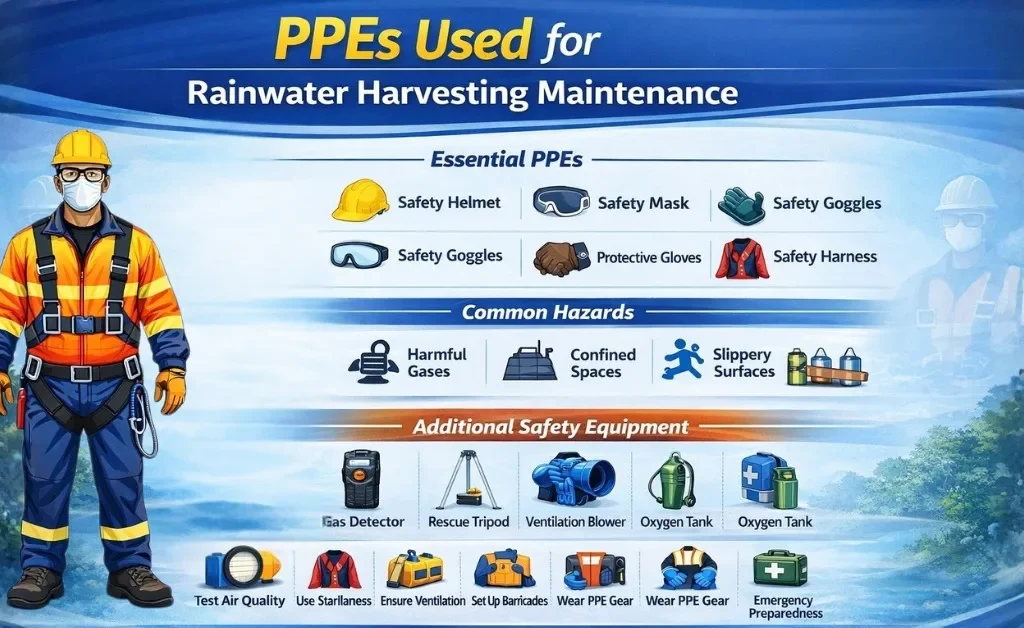
PPEs Used for Rainwater Harvesting Maintenance
Rainwater harvesting systems play an important role in conserving water and supporting sustainable infrastructure. Many organizations today invest in rainwater harvesting system installation to reduce water dependency and promote sustainable water management. These systems help collect and store rainwater for reuse, reducing dependence on groundwater and municipal water supplies.
However, maintaining rainwater harvesting systems often requires technicians to work in confined spaces such as recharge pits, filtration chambers, underground tanks, and pipelines, where various safety risks may exist.
For technicians and maintenance teams, Personal Protective Equipment (PPE) is essential to prevent injuries, exposure to harmful gases, and other workplace hazards. Proper safety equipment ensures that maintenance tasks such as cleaning, inspection, and repairs can be carried out safely.
At NIPSTec, a company that provides rainwater harvesting consultancy, installation, and maintenance services across India, worker safety is a top priority. Using the correct PPEs used for rainwater harvesting maintenance helps technicians perform their work efficiently while minimizing potential risks.
This guide explains the essential PPEs, additional safety equipment, worker health measures, and best practices followed during rainwater harvesting system maintenance.
What is PPE in Rainwater Harvesting Maintenance?
Personal Protective Equipment (PPE) refers to protective gear worn by workers to reduce exposure to hazards during maintenance operations.
PPE is essential for protecting workers from injuries, infections, chemical exposure, and accidents.
Using the appropriate PPEs used for rainwater harvesting maintenance is not only a safety requirement but also a professional standard followed by responsible service providers.
Essential PPEs Used for Rainwater Harvesting Maintenance

Maintenance teams use several types of protective gear during inspection, cleaning, and repair activities.
Safety Helmet
A safety helmet protects workers from head injuries caused by falling objects, tools, or accidental impacts when working near pits, construction areas, or underground structures.
Face Mask
Maintenance work may involve dust, microbial contamination, and unpleasant odours from stagnant water or sludge.
A face mask helps protect workers from:
- Airborne dust particles
- Microbial contamination
- Harmful fumes or odours
In certain cases, specialized respirators may also be used.
Safety Goggles
Cleaning rainwater harvesting systems often involves removing mud, sand, and debris.
Safety goggles protect the eyes from:
- Dust particles
- Water splashes
- Chemical cleaning agents
Protective Gloves
Protective gloves help prevent:
- Cuts and abrasions
- Bacterial contamination
- Chemical exposure
Commonly used gloves include rubber, nitrile, and heavy-duty industrial gloves.
Safety Jacket
A safety jacket, usually reflective, improves worker visibility at maintenance sites.
High-visibility clothing helps prevent accidental collisions with vehicles or machinery.
Safety Shoes / Safety Boots
Safety shoes or boots provide:
- Anti-slip protection
- Protection from sharp objects
- Electrical insulation in certain environments
Many workers use steel-toe boots for additional protection.
Safety Belt (Safety Harness)
It helps to:
- Prevent falls
- Enable safe entry into confined spaces
- Support quick rescue during emergencies
The harness is typically connected to a tripod lifting system.
Additional Safety Equipment Used During Maintenance
Apart from PPE, several advanced safety tools are used during rainwater harvesting system maintenance.
Gas Detector
Confined spaces such as recharge pits may contain dangerous gases.
A gas detector helps identify:
- Oxygen deficiency
- Methane
- Hydrogen sulfide
- Carbon monoxide
Detecting these gases before entering confined spaces prevents serious health risks.
Hi-Tech Tripod
It supports:
- Controlled entry and exit
- Emergency rescue operations
- Attachment of safety harnesses
Tripods are widely used in confined space safety operations.
Exhaust System
An exhaust system or ventilation blower helps remove harmful gases and supply fresh air into underground chambers.
Proper ventilation is essential before and during confined space maintenance.
Barricading
Maintenance areas are often barricaded to prevent unauthorized access.
Barricading helps:
- Protect pedestrians
- Prevent accidental falls
- Maintain controlled work zones
Safety Signals
Clear safety signs communicate hazards at the maintenance site.
Examples include:
- Danger signs
- Confined space warning signs
- Slippery surface warnings
Safety signals increase awareness and reduce accidents.
CCTV Monitoring
In large facilities or commercial projects, CCTV monitoring may be used during maintenance activities.
This allows supervisors to:
- Monitor worker safety
- Ensure proper procedures are followed
- Respond quickly in emergencies
Common Risks During Rainwater Harvesting Maintenance
Maintenance of rainwater harvesting systems can involve several hazards, including:
- Exposure to harmful gases in confined spaces
- Slippery surfaces leading to falls
- Contact with contaminated water
- Falling objects during structural repairs
- Lack of oxygen in underground chambers
- Electrical hazards from pumps or equipment
Safety practices should follow guidelines recommended by OSHA safety standards.
Using proper PPEs used for rainwater harvesting maintenance significantly reduces these risks.
Conclusion
Rainwater harvesting systems are valuable for sustainable water management, but their maintenance must be performed safely and professionally.
Using the correct PPEs used for rainwater harvesting maintenance – including helmets, gloves, safety belts, and protective footwear – helps protect workers from potential hazards. Advanced safety tools such as gas detectors, tripods, and ventilation systems further improve safety during confined space operations.
By following proper safety protocols, providing worker training, and ensuring health support measures, rainwater harvesting companies can maintain high safety standards while delivering reliable services.
At NIPSTec, prioritizing worker safety ensures that rainwater harvesting systems remain efficient, reliable, and safe to maintain.

