
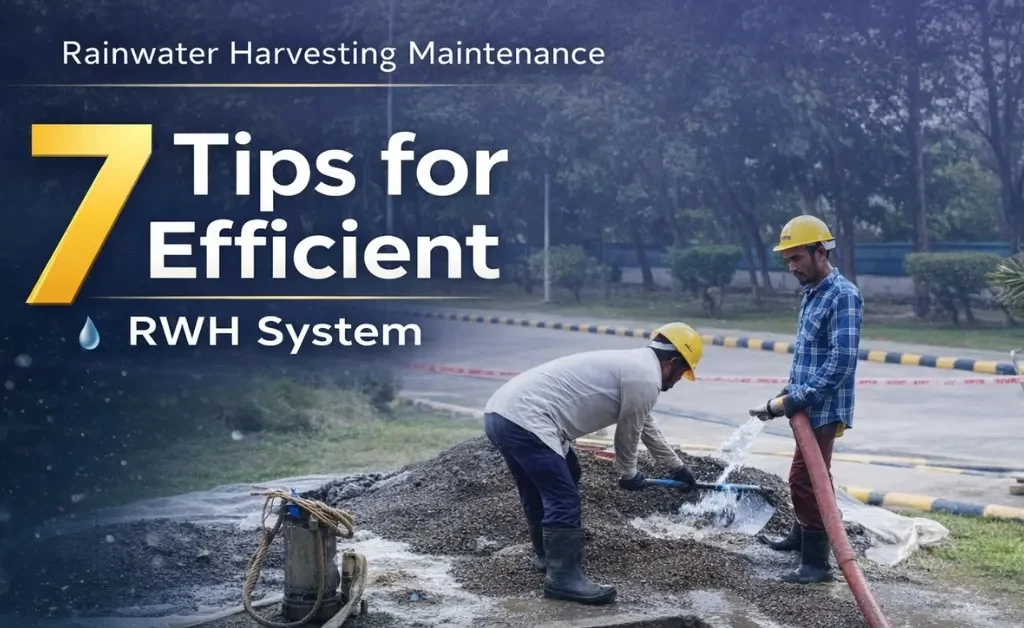
Rainwater Harvesting Maintenance Guide: Keep Your RWH System Efficient for Years
Rainwater harvesting systems are designed to support sustainable water management, but their efficiency depends largely on regular upkeep. Proper maintenance not only improves groundwater recharge but also ensures compliance with environmental guidelines and long-term system performance. This guide explains practical maintenance steps that help residential societies, commercial buildings, and industries keep their rainwater harvesting systems functioning efficiently for years.
Why Maintenance Matters More Than Most People Think
Across India, water levels are falling every year, and rainwater harvesting is no longer just an environmental initiative – it has become a practical necessity for buildings and industries. Many societies and organizations install rainwater harvesting systems with good intentions, but after installation, maintenance is often overlooked.
In reality, an RWH system behaves like any other infrastructure. If it is not checked periodically, dust, leaves, and fine silt slowly reduce its performance. The system may still look functional from the outside, but underground recharge efficiency keeps declining.
Regular maintenance keeps the system effective, improves groundwater recharge, and avoids expensive restoration work later. A little attention every year can keep the system working smoothly for decades.
1. Pre-Monsoon Preparation: Small Effort, Big Impact
The most suitable time for servicing is just before the monsoon season, generally between April and May. Preparing the system early ensures rainwater flows properly when heavy showers begin.
Cleaning the Catchment Area
Your rooftop or paved surface acts as the collection point. During dry weather, it gathers dust, bird droppings, and airborne particles. If not cleaned, these impurities directly enter filters and recharge pits during the first rains. A simple wash before the monsoon significantly improves water quality.
Trimming Nearby Trees
Leaves falling from nearby branches are one of the most common reasons for pipe blockage. Cutting back overhanging branches reduces repeated cleaning during the rainy season.
Checking Gutters and Downpipes
Loose joints, cracks, or slight leakage in pipelines often go unnoticed. Inspecting and fixing them early prevents water loss and wall dampness later. For professional inspection and servicing, organizations often rely on experienced rainwater harvesting maintenance services to ensure systems are ready before the monsoon season.
2. First Flush System: The Most Important Yet Ignored Component
The first rain always carries dust and pollutants collected from rooftops and the atmosphere. Allowing this water to enter the system can reduce filtration efficiency. A first-flush arrangement diverts this initial dirty water away from recharge structures.
After heavy rainfall, make sure to:
- Empty the chamber
- Remove settled dirt
- Check that the valve operates freely
This simple step keeps the rest of the harvested water cleaner.
3. Filter Maintenance: The Working Heart of the System
Traditional Sand Media Filters
Many systems still use sand, charcoal, and gravel layers. Basic upkeep includes:
- Removing accumulated silt once a year
- Washing and drying filter media
- Replacing material every few years when efficiency drops
Modern Filters
FRP or stainless-steel filters require less effort but should still be inspected regularly. Occasionally, plastic waste or debris blocks the inlet and restricts flow. A quick visual inspection every month is usually enough.
4. Recharge Pit and Borewell Maintenance
Recharge Pit Cleaning
Over time, fine soil particles settle at the bottom and create a compact layer. This reduces the soil’s ability to absorb water. Annual desilting restores permeability.
Borewell Servicing
If water infiltration becomes slow, compressor flushing helps reopen underground pores and improves recharge capacity. Equally important is disposing of the removed silt away from the site so it does not return during the next rainfall.
In large campuses, hospitals, and industrial facilities, maintenance is usually performed by trained professionals who understand soil conditions, recharge behavior, and filtration performance. Technical servicing helps identify hidden issues early and restores recharge efficiency without structural modification.
5. Safety During Maintenance Work
Cleaning recharge pits or underground tanks involves confined spaces and should never be done casually. Professional teams normally follow safety practices such as:
- Checking air quality before entry
- Using safety harness systems
- Wearing helmets and protective gear
6. Preventing Mosquito Growth and Contamination
Use Protective Mesh
All inlet and overflow pipes should have fine mesh covers to block insects and debris.
Keep Tanks Covered Properly
Sunlight encourages algae growth. Properly sealed lids help maintain water quality.
Test Water Periodically
Where harvested water is reused for industrial or utility purposes, periodic testing ensures safe usage.
7. Practical Maintenance Schedule
| System Area | When to Check | What Should Be Done |
|---|---|---|
| Roof surface & rainwater flow path | Every month | Remove leaves, dust, or anything that may interrupt water movement |
| First flush chamber | After major rains | Empty and clean collected impurities |
| Filter system | Every 3 months | Wash components and check for clogging |
| Recharge pit | Once a year | Professional cleaning and silt removal |
| Borewell recharge line | 6–12 months | Technical flushing if recharge slows |
| Tank lids & covers | Monthly | Ensure proper sealing and physical condition |
Frequently Asked Questions (FAQs)
How often should a rainwater harvesting system be maintained?
Basic inspection should be done monthly, while professional servicing is recommended at least once a year before the monsoon season.
What happens if rainwater harvesting maintenance is ignored?
Filters clog, recharge slows, and groundwater replenishment efficiency reduces over time, sometimes requiring costly restoration.
Is professional maintenance necessary?
Yes. Technical inspection ensures underground recharge structures function properly and remain compliant with environmental standards.
Does maintenance improve groundwater recharge?
Regular cleaning and desilting restore soil permeability, allowing rainwater to infiltrate more efficiently.
Conclusion
Rainwater harvesting systems deliver long-term environmental and financial benefits only when supported by consistent maintenance. Regular inspection improves groundwater recharge efficiency, protects infrastructure, and minimizes repair costs. With proper care and timely servicing, a well-designed system can continue contributing to sustainable water management for decades.
NIPSTec Ltd. – Rainwater Harvesting Experts
With over two decades of experience in rainwater harvesting consultancy, installation, and maintenance, NIPSTec Ltd. supports residential societies, institutions, and industries across India with reliable groundwater recharge solutions.
Office: Main Market, Malviya Nagar, New Delhi
Phone: +91-9811102329 | 9582216876
Website: www.therainwaterharvesting.com

